
Divers & Grebes
Two groups of true water birds. These birds are so well adapted to swimming that they can often barely walk on land. So outside of the breeding season they rarely leave the water, except tp fly from one location to another. These are fish feeders. They vary from some of our commonest waterbirds to some of our rarest. Generally easiest to see in winter. It is the spring and summer months when they transform into some of the most stunning plumages though.

Pair of Great-crested Grebe
Black-throated Diver - The rarest and arguably most beautiful of our divers, in breeding guise. Size-wise they fall between the Great Northern and the Red-throated. They are a difficult species to see. An occasional example drops into our lakes or reservoirs during Winter, but they are mainly coastal. They breed in the far north of Scotland. Very similar in appearance to the GND in Winter, but the white patches on the flanks and the cleaner colour separation line down the neck point you towards a Black-throated. The black throat is only seen during Spring/Summer.

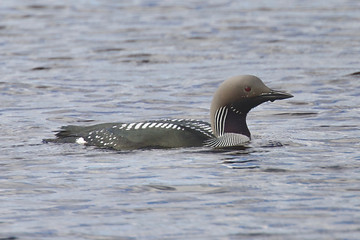
A breeding bird on Lochindorb in the Scottish Highlands in April.
A winter juvenile bird at Arrow Valley CP, Redditch - December
Great Northern Diver - The largest of our three divers and the one most commonly found inland during Winter. Summer and Winter plumage are quite different. Usually solitary. You're likely to have to go to northern Scotland to see one in in it's stunning breeding plumage. As you can see I haven't got very close to one in Summer yet.


Photo 1 - Poole Harbour in Feb. 2 - Chasewater, Staffs in December. This youngster was there a few weeks. 3 - Shetland in June, Adult bird in breeding plumage.
Red-throated Diver - Our smallest and most numerous diver. Unmistakable in Summer, with good light. Their bills are shorter and upturned. The red patch on the throat is a giveaway, plus their pale grey head and neck. Coastal, rarely venture inland. Breed in northern Scotland, especially on Shetland where all these images were taken. These are all birds in summer, breeding plumage.


______________________________________________________________________________________________________________________________
Black-necked Grebe - Scarce Winter visitor to inland lakes and reservoirs. Distinct in breeding plumage. A few breed at sites in Cheshire and Yorkshire. Very attractive little bird, even in winter. Has distinctive bright red eyes, against a black face, which really stands out when the light catches. They can hang around for a few weeks in winter, but are usually fairly fleeting on passage, in breeding plumage. Although both photos were taken in the month of March, the two pictures show their contrasting seasonal plumage.

This bird, in non-breeding/winter plumage, was quite some distance from the shore of Draycote Water, in Warks. However the superb light enabled a reasonable photo. Early March.

A bird in breeding plumage at one of their breeding sites - Woolston Eyes, Warrington. Late March
Great-crested Grebe - A stunning bird. Often under appreciated as it is common here all year round. Seen on lakes, reservoirs and the coast. They have an elaborate mating ritual and often nest in open sites, so are easy to view. They carry the chicks on their backs, once they've left the nest. They're more numerous in Winter, but less impressive.


Winter plumage.

Juvenile - still showing the stripes down the side of their head and necks.
Little Grebe - Fairly common waterbird but can be missed due to their size and the time they spend diving. They have a very distinctive whinnying call which you may here from a reed bed, well before you spot them. Reasonably easy to see year round. Their bodies are like little bundles of fluff.
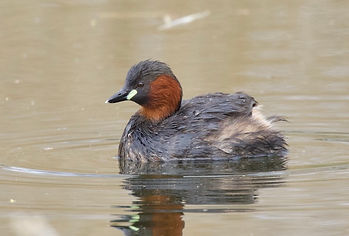

Breeding plumage.
Non-breeding/Winter plumage.

Juvenile.
Red-necked Grebe - Rarely seen inland. Between Black-necked and Great-crested in size. Red Listed. Very few spend the Summer here. They're only red-necked during spring and summer. Occasionally drop in at lakes or reservoirs during Winter, or on Spring passage. The two examples photographed here both stayed a few weeks during Winter. Both tended to be unafraid of people.

1st Winter bird. Trentham Gardens. January.

WMBC Belvide, Staffs. January
Slavonian Grebe - A rare, Red Listed grebe. Very similar to the Black-necked in Winter but slightly more striking in both breeding and winter plumages. Slav's are certainly stunning in spring. Rarely seen inland generally but a handful of pairs breed on lochs in northern Scotland.

A breeding male bird on Avielochan in Scotland in April.
