top of page

Pigeons & Doves
5 actual species of pigeon live with us. Three are very well known to most of us. All resident except the Turtle Dove, which is a Summer migrant. Often derided as a pest.

Wood Pigeon
Collared Dove - A comparative newcomer to this country, only arriving during the last 50-60 years. Now common and widespread. Much smaller than wood pigeon and with a three syllable coo (song) compared with the wood pigeons five.


Ferral Pigeon - Not a natural species. Ferral Pigeons are the familiar birds we see in our town centres. They've established from escapes and releases of ex captive racing and pet pigeons. They were originally bred from the Rock Dove, which these days is quite a rare bird.
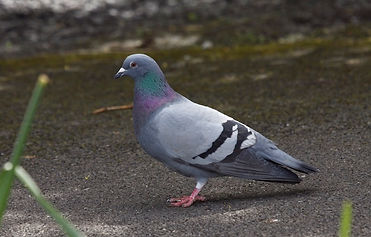


Rock Dove - The origin of racing pigeons and therefore our town based feral flocks. Establishing what are true Rock Doves today can be tricky. I'd seen odd birds at a few sea cliffs sites but never been completely satisfied that they were the genuine article. However having visited Shetland I am happy that I have watched the true species. I saw a few flocks there that were truly wild and completely uniform in colour and form, unlike their town dwelling relatives.


Pictures 1+4 were taken on Shetland, 2&3 at RSPB Bempton Cliffs. All in June
Stock Dove - Fairly widespread around farmland and open wooded areas but easily overlooked. We're so used to the ever present wood pigeon and feral pigeons, that these shy and unobtrusive birds can be missed. Learn their two syllable song to pick them out with your ears, as they'll probably be more distant. Similar to Rock Doves but without the strong black wingbars and the pale rump in flight. They have a large, black eye which gives them a soft, gentle appearance. Plus a metallic turquoise flash on the neck. We've had a single bird come into our garden in late Winter for the past 3 years, which is quite a privilege. (Photo 1&2)


Turtle Dove - One of our most threatened birds. Massively declined in recent years. They are no longer seen in many traditional areas. However they have now returned in good numbers to the Knepp re-wilding site in West Sussex.
They are our smallest pigeon, being similar in size to a Mistle Thrush. Their call is a lovely soft, purring sound. Once heard never forgotten.
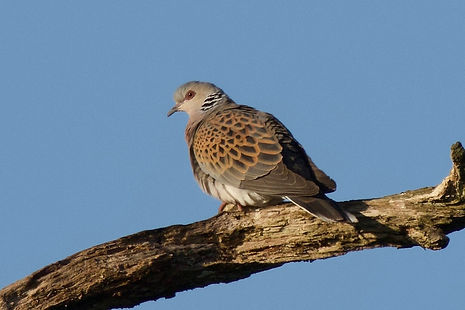
Knepp Est, W. Sussex - May.
Wood Pigeon - Not a popular bird, as they are so numerous. Being large they eat a lot. In the garden they will often hog the bird table and take much of your bird seed. In the countryside they are often a pest to arable farmers as they can spoil crops of cereals or brassicas.


Juveniles
bottom of page